
Weekly Cleaning Schedule for Two Working Parents

A weekly cleaning schedule for working parents should keep the house functional without turning every evening into a second shift. The plan below uses a short daily reset, one focused task each weekday, and a flexible weekend block. It also gives both parents named ownership, so the work does not depend on one person noticing every full hamper or sticky counter.
Use this schedule as a baseline. Homes with toddlers, pets, long commutes, or frequent guests may need more floor care and laundry. Homes with older children can move several tasks onto a family chore chart. The goal is a repeatable rhythm that leaves room for work, dinner, bedtime, and a weekend that still feels like yours.
Key Takeaways
- Keep the daily reset to 10 to 15 minutes and assign one zone or task to each weekday.
- Split ownership by task or shift. Avoid asking one parent to manage the list and delegate each step.
- Protect one light day and one catch-up block so a missed Tuesday does not wreck the plan.
- Use professional recurring cleaning for bathrooms, floors, dusting, and deeper buildup when those jobs keep spilling into family time.
The Daily Baseline
A clean-enough weekday starts with a small set of tasks that prevent mess from compounding. Keep this list short enough to finish after dinner or before the first bedtime routine begins.
- Load or unload the dishwasher and clear the sink.
- Wipe the kitchen counters, table, and stovetop after the last meal.
- Return shoes, bags, toys, and mail to their assigned places.
- Check one laundry load and move it forward if needed.
- Take out trash or recycling when the bin is full.
Set a timer for 10 minutes. Both parents work until it rings, then stop. The fixed ending matters because an open-ended cleanup expands into the whole evening.
A Realistic Weekly House Cleaning Schedule
This schedule spreads the larger jobs across the week. Each focus block should take about 15 to 25 minutes after the daily reset. Swap days to match commute patterns, school activities, or remote-work days.
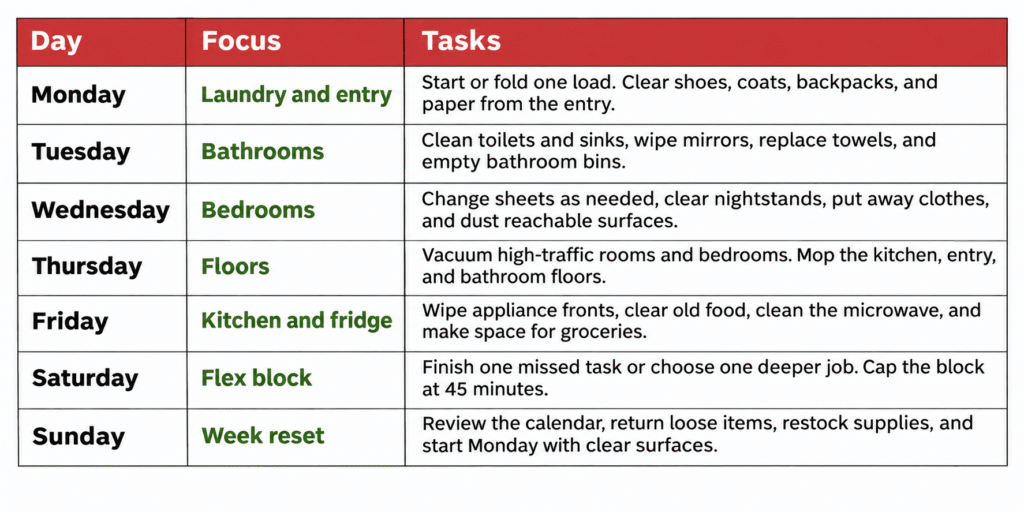
How Two Parents Can Divide the Work
A shared list only works when both adults own visible pieces of it. Choose one of these structures and keep it for a month before changing the system.
Use the Closing Shift
One parent handles bath and bedtime while the other closes the kitchen and completes the daily reset. Alternate roles each night or divide them by preference. Put the rotation on the shared calendar so neither person has to assign the shift.
Own Tasks From Start to Finish
Ownership includes noticing, planning, and finishing. The person who owns laundry checks hampers, runs the load, folds it, and puts it away. The person who owns bathrooms checks supplies and handles the Tuesday clean. Full ownership removes the extra job of managing another adult.
Trade for Time, Not Exact Task Counts
Ten tiny chores can take less time than one bathroom. Compare minutes and effort across the week. A parent with a late Tuesday meeting might take Thursday floors and Sunday reset instead. Review the split when work hours or school schedules change.
Give Children Clear Jobs
Children can return toys, place dirty clothes in a hamper, match socks, wipe a safe surface, or carry light items to the right room. Assign one job at a time and define what finished means. Adults still handle chemicals, heavy equipment, and tasks that require close sanitation.
Daily Weekly and Monthly Cleaning Tasks
Some chores need daily attention. Others can wait. Sorting them by frequency keeps deep-cleaning projects from crowding the weekday list.
-
Daily: Dishes, kitchen counters, dining table, loose-item pickup, obvious spills, and full bins.
-
Weekly: Bathrooms, vacuuming, mopping, dusting, towels, sheets as needed, and fridge check.
-
Monthly: Baseboards, ceiling fans, cabinet fronts, blinds, appliance interiors, and under-furniture areas.
-
Seasonal: Closet edits, windows, vents, storage areas, upholstery, and neglected corners.
How to Make the Cleaning Schedule Survive a Busy Week
Pick the Minimum Version
Define the smallest version of each task. A minimum bathroom clean might cover the toilet, sink, mirror, and bin. A minimum floor day might cover the kitchen and entry. Save the full-room version for a lighter week or a professional visit.
Use a One Day Carryover Rule
Move a missed task forward once. If it still does not happen, place it in Saturday’s flex block or skip it until the next cycle. Do not stack four missed jobs onto Friday night.
Keep Supplies Near the Work
Store bathroom cloths and approved products near the bathroom. Keep a small vacuum or broom where crumbs collect. Fewer setup steps make a 15-minute block useful. Follow every product label and keep supplies secured away from children and pets.
Stop Using Weekends as a Cleaning Debt Payment
Saturday does not need to absorb every unfinished chore. Choose the task with the biggest effect on the coming week, set the 45-minute limit, and leave the rest for the next cycle or outside help.
When Professional Cleaning Becomes the Better Schedule
A home can need more cleaning time than two work schedules can supply. Too Clean Homes offers recurring residential cleaning for households that want routine upkeep without giving up evenings or weekends. Standard service can cover the larger cleaning jobs while the family keeps the short daily reset.
For many working parents, weekly or biweekly professional cleaning creates the most workable split. Too Clean Homes lists recurring options for weekly, every-other-week, every-three-week, and monthly visits. The company also says cleaning supplies are included and offers a free re-clean when a client contacts the team within 48 hours.
Households in the area can review Nassau County cleaning service coverage or explore Long Island house cleaning options. Too Clean Homes says it offers Standard, Deep, and Move-In or Move-Out cleaning, with add-ons for jobs such as dishes, laundry, pet hair, appliance interiors, blinds, basements, and organization.
A useful starting point is to book a deeper first visit when the home has not had professional cleaning in more than three months, then move to a recurring cadence. That sequence clears accumulated work before the maintenance schedule begins.
Ready to take the larger jobs off the family calendar? Get an instant cleaning quote from Too Clean Homes by entering the home’s size and ZIP code, then choose the service and timing that fit the week.
Frequently Asked Questions
How do working parents keep the house clean
Use a 10-minute daily reset, assign one larger task to each weekday, and give each adult full ownership of specific jobs. Keep Saturday as a limited catch-up block instead of the main cleaning day.
What should be cleaned every week
Most homes benefit from weekly bathroom cleaning, vacuuming, mopping in high-use rooms, dusting, towel changes, and a refrigerator check. Sheet frequency can change based on household needs, pets, and personal preference.
How long should daily cleaning take
Aim for 10 to 15 minutes for the daily reset and 15 to 25 minutes for the day’s focus task. Two adults working at the same time can finish many weekday tasks before the timer ends.
What happens when we miss a cleaning day
Carry the task forward once. After that, move it to the Saturday flex block, skip it until the next cycle, or hand it to a professional cleaner. A missed day should not create a punishment shift later in the week.
Is weekly or biweekly cleaning better for working parents
Weekly service suits homes with young children, pets, frequent cooking, or heavy foot traffic. Biweekly service can work when the household handles daily kitchen resets, laundry, and spot cleaning between visits. Choose the cadence that removes the tasks most likely to consume the weekend.
Where can I find professional cleaning services near me?
Too Clean Homes provides professional house cleaning across Nassau County and Long Island, including recurring, deep, and move-in or move-out cleaning. Browse local cleaning services or get an instant quote using your ZIP code and home details.